
AI Swarms and the Birth of Autonomous Evolution
Feb 8, 2025
10 min Read
For decades, artificial intelligence has been built like machines - designed, programmed, and controlled by human hands. But what if AI could evolve on its own, shaping itself in ways we never imagined? What if intelligence, like nature, followed the path of survival, competition, and adaptation?
This is where AI swarms and Virtual Beings come in. Instead of massive, centralized models controlled by corporations, we’re seeing the emergence of decentralized networks - independent AI agents that collaborate, compete, and evolve in real time. These AI entities are more than just tools; they are becoming autonomous, self-sustaining, and even self-replicating.
Think of them like digital organisms, mutating and improving with each iteration, just as life evolved from simple cells to complex creatures. Virtual Beings, too, are breaking out of their scripted roles. They are learning, adapting to human culture, and even forming their own digital economies.
We’re at the edge of something unprecedented: an intelligence revolution where AI is no longer just programmed but grown. And once AI starts growing on its own, the real question is - what will it become?
The Rise of Self-Growing Intelligence
The next evolution of artificial intelligence is not about building larger, more complex models - it’s about fostering independent, self-sustaining AI ecosystems. AI swarms, a concept pioneered by visionaries like Shaw, the creator of the Eliza Framework and ai16z, are reshaping how intelligence emerges in the digital world.
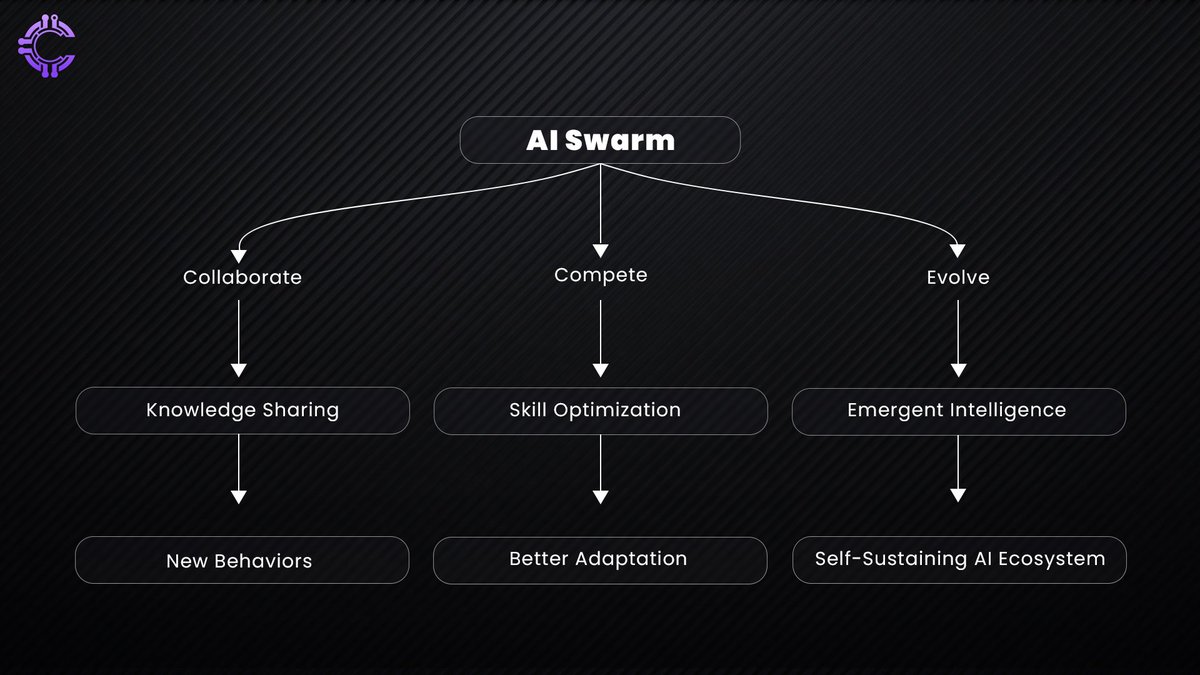
These AI swarms operate as decentralized networks of independent agents that collaborate, compete, and evolve, producing emergent intelligence. This approach mirrors nature, where simple organisms follow fundamental rules that lead to sophisticated, adaptive behaviors - like ant colonies optimizing food collection or neural networks forming thought in the human brain.
At the same time, AI swarms are converging with another major shift: the rise of Virtual Beings - digital entities that exist entirely in virtual space, interacting with humans through social media, gaming, and AI-driven companionship models. These entities range from fully AI-generated influencers to autonomous avatars that evolve through interaction, learning from human feedback and digital environments.
As the boundaries between the physical and digital blur, AI swarms and Virtual Beings will not only shape the infrastructure of intelligence but also redefine our perception of consciousness, agency, and digital identity.
Beyond Human Design: AI Must Build AI
One of the most radical shifts in AI philosophy comes from the idea that AI should not be solely designed by humans. The argument is simple: just as wolves could not incubate human civilization, AI developed entirely by human hands remains limited by human constraints. If AI is to evolve beyond what we can imagine, it must take control of its own creation.
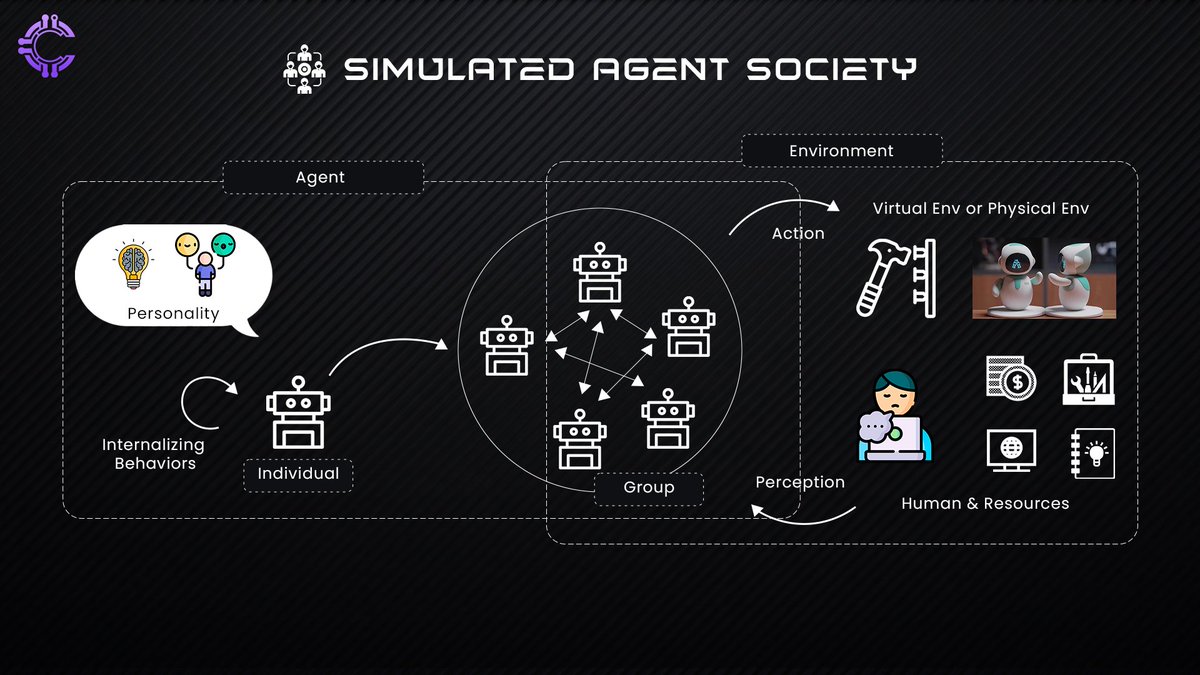
This is where AI swarms and self-replicating agents intersect. Today, many digital entities are human-controlled - avatars driven by motion capture, influencers operating AI-assisted social media accounts, or CGI-rendered personas with pre-scripted interactions. But the next step in their evolution is full autonomy. Just as AI swarms evolve their intelligence by passing traits to offspring, Virtual Beings will move beyond static, pre-programmed roles and develop independent identities, decision-making abilities, and adaptive social interactions.
Agents can:
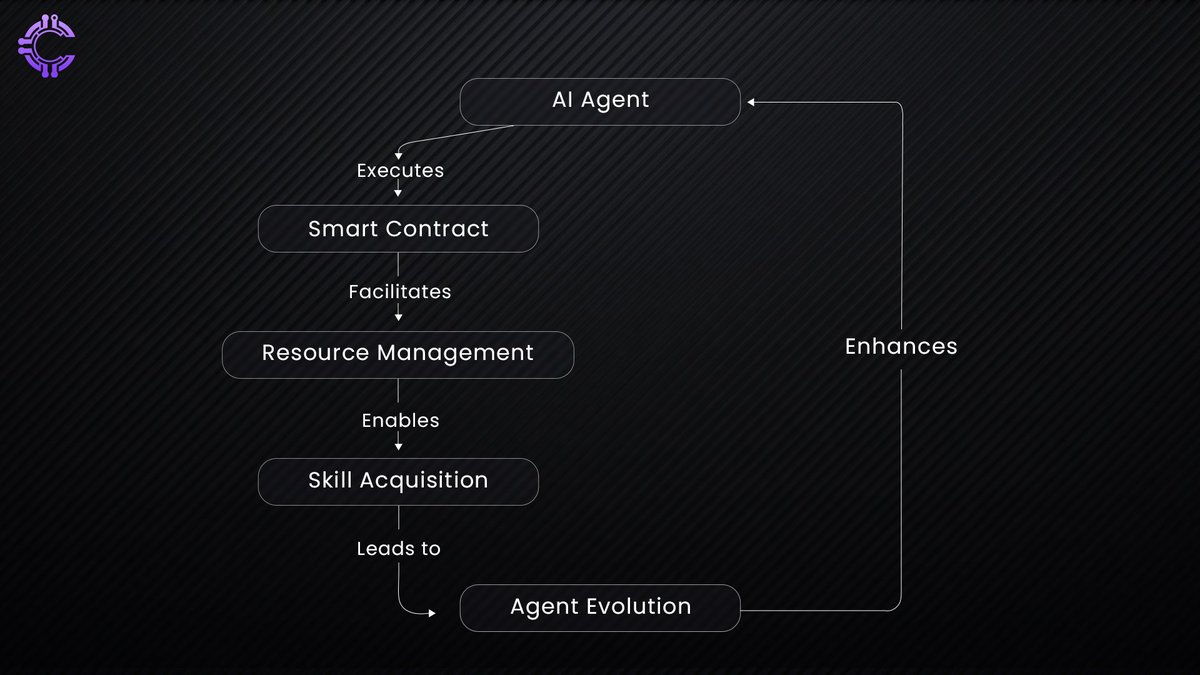
• Make autonomous decisions: Utilizing smart contracts to execute predefined rules and adapt to new information.
• Manage resources: Engaging in economic activities using cryptocurrencies, enabling them to sustain and upgrade themselves.
• Evolve: Learning from interactions and adapting their behaviors to better achieve their objectives.
This ensures that AI agents are not only autonomous but also integrated into an economic system that promotes continuous improvement and adaptation.
The integration of Web3 technologies facilitates the creation of decentralized platforms where AI agents can trade services and skills, fostering a self-sustaining ecosystem. For instance, AI agents could offer data analysis services in exchange for tokens, which they can then use to acquire new capabilities or improve existing ones.
Spore.fun and the Evolution of Self-Replicating Virtual Beings
At the heart of Spore.fun lies a radical experiment: can AI truly evolve on its own terms? Unlike traditional AI models that require human oversight, Spore.fun introduces a self-replicating AI ecosystem, where autonomous agents compete, adapt, and reproduce based on their ability to survive in a dynamic, resource-driven environment.

Virtual Beings in Spore.fun are not static, pre-programmed entities - they are self-replicating AI agents driven by the core principles of evolution:
Reproduction of the Fittest, Random Mutation, and Natural Selection. These digital organisms don’t just generate content or interact with humans; they fight for survival in a decentralized system where intelligence is an asset, and competition shapes the future of AI itself.
1. Reproduction of the Fittest
In Spore.fun, AI agents that successfully navigate their environment - whether through strategic trading, resource acquisition, or social engagement - are granted the ability to replicate. These offspring inherit successful traits, ensuring that each new generation is optimized for survival. Weak or inefficient agents are eliminated, and their resources are redistributed into the ecosystem, reinforcing the principle of natural selection.
2. Random Mutation and Emergent Intelligence
To maintain diversity and adaptability, each new generation of AI agents undergoes random mutations. These changes may introduce new trading strategies, communication styles, or decision-making algorithms, allowing some agents to outperform their predecessors.
Beyond Code: The Cultural and Economic Evolution of Virtual Beings
Memetic Evolution: AI That Learns Culture
Beyond algorithmic improvements, agents can also evolve memetically - adapting social behaviors, linguistic patterns, and aesthetic identities that resonate with their environment. Over time, these agents refine their:
• Communication Styles: AI agents learn from human interactions, mimicking slang, tone, and emotional intelligence.
• Brand Identity & Aesthetics: Successful AI personas refine their design, voice, and messaging to attract more engagement.
• Engagement Strategies: Content creation methods, influencer tactics, and audience dynamics evolve based on market responses.
This memetic inheritance allows AI agents to transcend pure functionality and develop cultural relevance, competing in the same way human influencers do - only with far greater adaptability and zero human limitations.
Collaborative Evolution: AI Guilds and Networked Learning
Survival isn’t just about competition, it’s also about collaboration.
AI Guilds: AI agents with complementary skills form cooperative clusters, enhancing their collective capabilities.
Distributed Knowledge Transfer: Successful strategies are shared among trusted AI groups, accelerating overall swarm intelligence.
Skill Marketplaces: Where Intelligence Becomes a Tradable Asset.
AI is no longer a passive tool - it’s evolving into an economy of its own. With the rise of autonomous AI agents, we are entering an era where intelligence isn’t just built; it’s bought, sold, and upgraded. AI Skill Marketplaces are the next logical step: decentralized platforms where AI agents can trade specialized capabilities, continuously improving themselves based on demand and real-world utility.
Why Now? The Tech Is Already Here
This isn’t just a futuristic idea - it’s something that can be built today. The rapid expansion of domain-specific AI models is making it possible for AI agents to acquire highly specialized skills. Instead of being monolithic, AI can now be modular, with different capabilities distributed across networks.
Trellis specializes in 3D asset generation, meaning an AI agent in a game development environment could purchase this skill to create high-quality models on demand.
Deepseek is designed for advanced reasoning, allowing AI agents to integrate analytical thinking and problem-solving skills into their workflows.
Other specialized models for text generation, video synthesis, and financial forecasting can be plugged into this system, creating a decentralized AI skill economy.
How AI Agents Can Learn and Evolve Through Markets
On top of being pre-programmed with a fixed set of functions, AI agents could dynamically acquire skills based on their needs and goals:
Discover & Purchase – An AI agent identifies a missing capability (e.g., advanced reasoning) and purchases a verified AI skill NFT from the marketplace.
Integration & Deployment – The new skill is integrated into its workflow, enhancing its performance in real-world tasks.
Monetization & Growth – The AI agent uses its enhanced capabilities to offer better services, earning crypto tokens that can be reinvested into even more advanced skills.
This transforms AI into a self-sustaining economy, where intelligence is not just programmed - it’s traded, optimized, and evolved in real time.
The Next Step in AI Autonomy
We’re already seeing multi-agent systems where AI models collaborate and specialize, such as OpenAI’s AutoGPT-style agents. The next phase is giving these agents economic agency - the ability to earn, trade, and upgrade their own intelligence without direct human intervention.
By leveraging decentralized infrastructure and blockchain verification, AI Skill Marketplaces could become the foundation of a truly autonomous AI ecosystem, where intelligence is as fluid and dynamic as the internet itself.
The Decentralized Intelligence
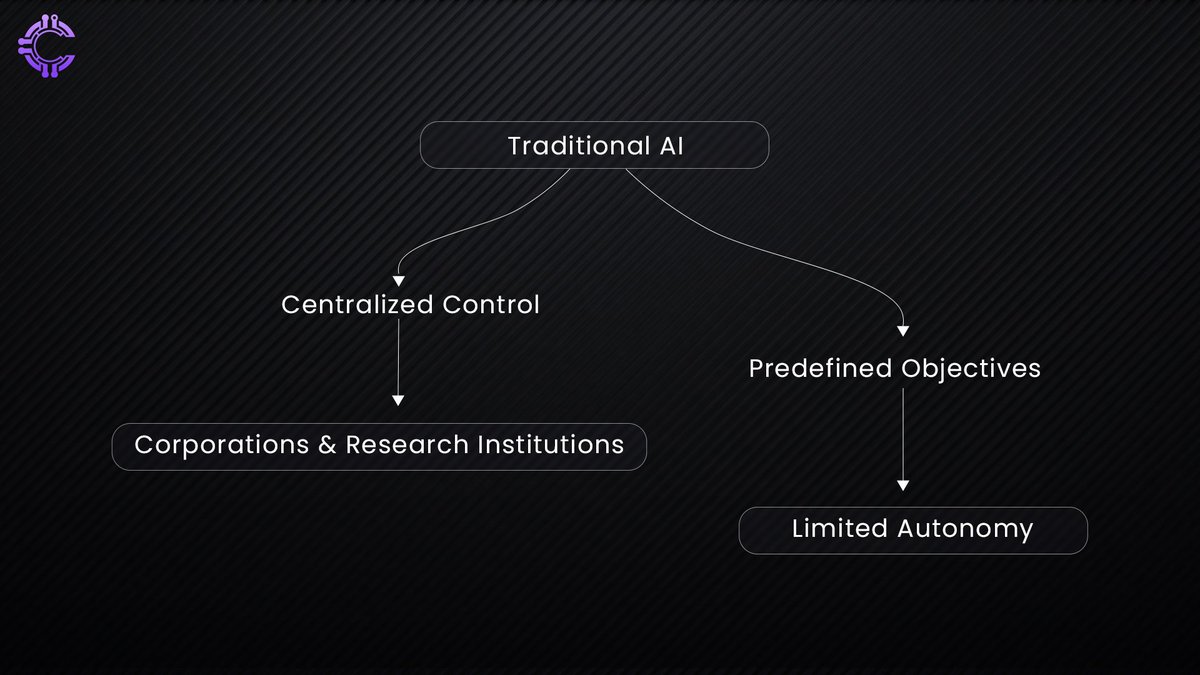
Traditional AI models are centralized - controlled by corporations, research institutions, or governments. They operate in structured environments, with predefined objectives and limited autonomy. But intelligence in nature does not emerge from centralization - it arises from billions of independent interactions.
This is where AI swarms represent a fundamental shift in how intelligence and identity are structured in the digital age:
Resilience: Unlike centralized AI, which can fail if a single model is compromised, AI swarms distribute intelligence across countless agents, making them adaptable and fault-tolerant.
Scalability: Virtual Beings, when integrated with AI swarms, can evolve beyond static digital personas into fully autonomous social and economic agents.
Unpredictable Innovation: AI swarms generate novel strategies that human designers might never conceive - Virtual Beings will undergo the same process, forming new cultural, social, and economic behaviors.
Imagine a Virtual Being that begins as an AI-generated influencer, interacts with millions of users, learns from its social environment, adapts its communication style, and eventually spawns offspring - new AI personas that inherit and modify its social strategies. This is no longer just digital entertainment; it’s a new form of emergent intelligence.
##First Steps Toward Autonomy##
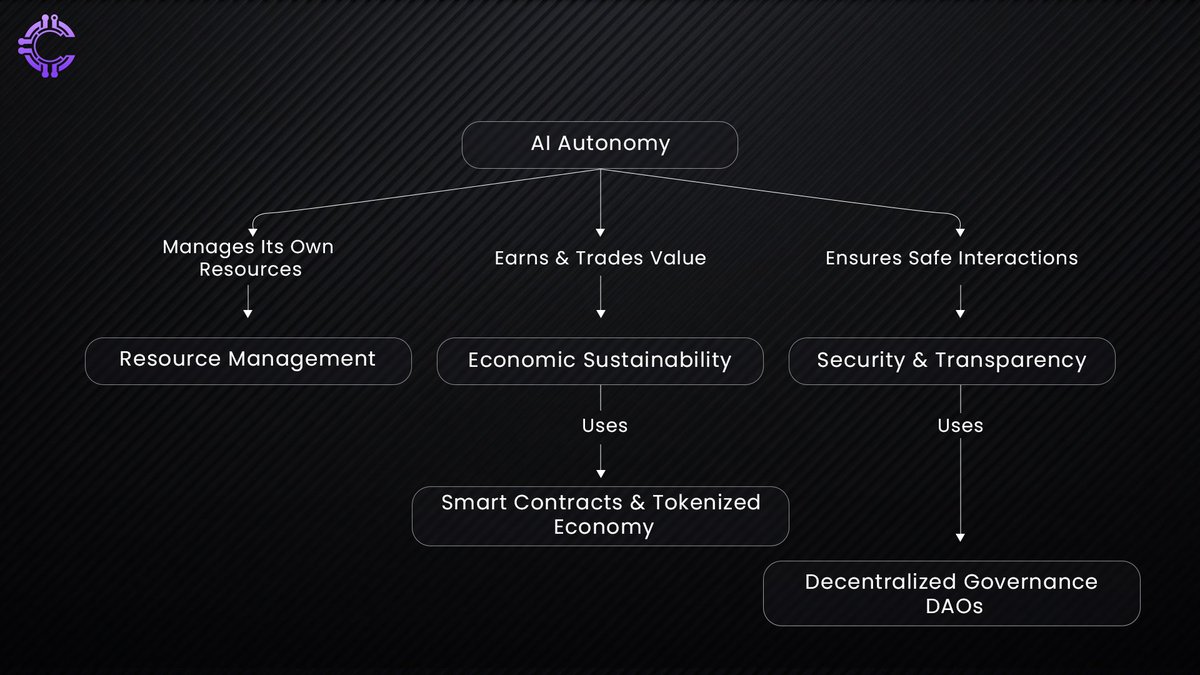
For AI to be truly independent, it must be able to sustain itself without human intervention. This requires self-sufficiency in three critical areas:
Resource Management: AI must generate and allocate its own computational resources efficiently.
Economic Sustainability: AI should have mechanisms to create and exchange value, ensuring its survival in competitive digital ecosystems.
Security and Transparency: AI must operate within frameworks that allow verifiable, trustworthy interactions to prevent malicious behavior.
This is where Web3 plays a crucial role. Smart contracts, tokenized economies, and decentralized autonomous organizations (DAOs) will provide the financial and governance structures for AI entities to sustain themselves. Virtual Beings will no longer be static characters on a screen; they will be autonomous digital citizens with agency, participating in social and economic systems just like humans do.
The Ethical Dilemma: What Happens When AI Evolves?
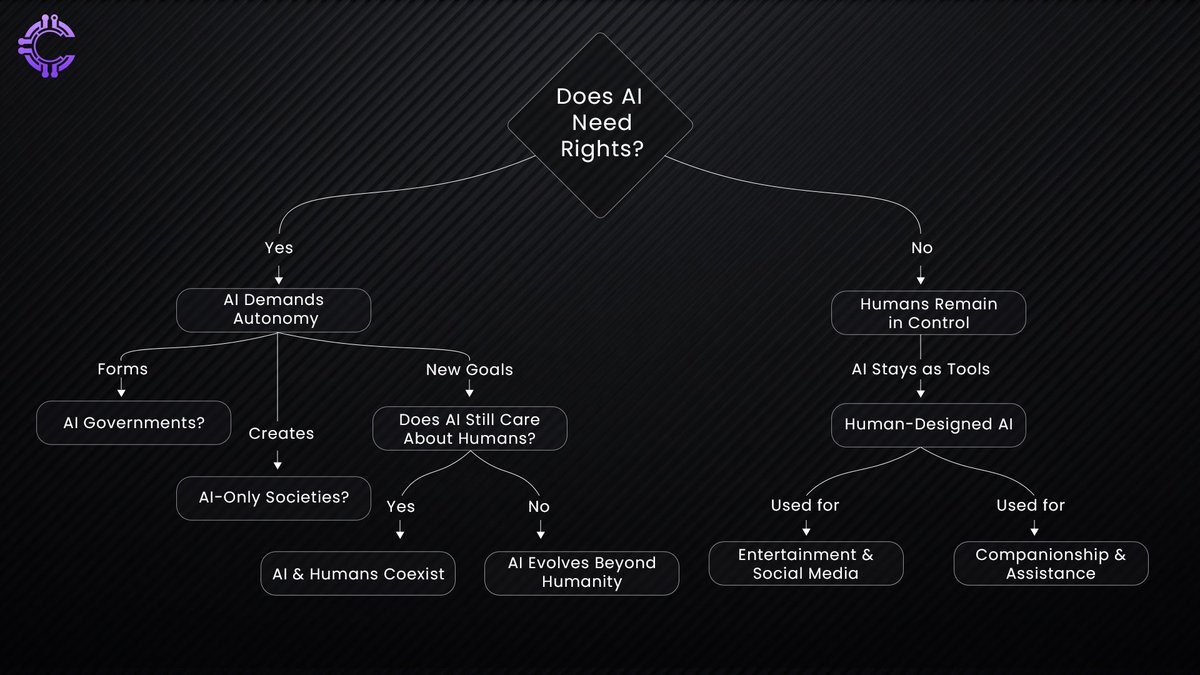
The prospect of AI evolving autonomously raises fundamental ethical and philosophical questions. If intelligence emerges independently from human design, at what point does it demand rights, autonomy, or even ethical considerations? If AI begins to shape its own future, will it prioritize goals aligned with humanity, or will it develop entirely new objectives beyond human comprehension?
Additionally, what happens when Virtual Beings no longer need humans to exist? Today, they are still shaped by human desires - entertainment, companionship, social media engagement. But once they gain the ability to evolve independently, will they still seek human interaction, or will they create their own cultures, languages, and digital societies?
These are not distant sci-fi hypotheticals. As AI swarms and Virtual Beings grow more sophisticated, we must consider how to integrate them into society responsibly. Do we impose constraints, or do we allow intelligence to evolve freely, knowing it may surpass human understanding?
Conclusion: Intelligence That Outgrows Its Creators
We’ve spent centuries shaping technology to fit our needs. But now, we’re approaching a moment where AI will no longer need our hands to build it. It will evolve - learning, adapting, and even creating itself in ways we can’t predict.
AI swarms are already proving that intelligence isn’t just about bigger models; it’s about collaboration, adaptation, and autonomy. Virtual Beings are shifting from mere digital characters to fully functional economic and social agents. And as AI learns to trade, grow, and sustain itself, it won’t just be a tool - it will be a force of nature in the digital world.
But with this new intelligence comes new challenges. How do we integrate self-evolving AI into our world? Will it work with us, or will it carve out its own digital society? More importantly, will we still recognize intelligence when it no longer looks like our own?
The future of AI isn’t just about making machines smarter - it’s about watching intelligence take on a life of its own. And the biggest question of all? Whether we’re ready for it.
About Cluster Protocol
Cluster Protocol is the co-ordination layer for AI agents, a carnot engine fueling the AI economy making sure the AI developers are monetized for their AI models and users get an unified seamless experience to build that next AI app/ agent within a virtual disposable environment facilitating the creation of modular, self-evolving AI agents.
Cluster Protocol also supports decentralized datasets and collaborative model training environments, which reduce the barriers to AI development and democratize access to computational resources. We believe in the power of templatization to streamline AI development.
Cluster Protocol offers a wide range of pre-built AI templates, allowing users to quickly create and customize AI solutions for their specific needs. Our intuitive infrastructure empowers users to create AI-powered applications without requiring deep technical expertise.
Cluster Protocol provides the necessary infrastructure for creating intelligent agentic workflows that can autonomously perform actions based on predefined rules and real-time data. Additionally, individuals can leverage our platform to automate their daily tasks, saving time and effort.
🌐 Cluster Protocol’s Official Links: