
AI on the Road: Navigating the Legal Aspects of Autonomous Vehicles
Dec 26, 2024
9 min Read
The age of autonomous vehicles is here, and it’s reshaping the way we think about transportation. Self-driving technology, once the stuff of science fiction, is becoming a reality on roads worldwide. Powered by advanced AI and machine learning, these vehicles promise safer streets, more efficient commutes, and a future where mobility is as seamless as tapping a button.
But the impact of autonomous vehicles goes far beyond convenience. Cities will need to rethink their infrastructure - traffic lights, road layouts, and even parking lots - adapting to a world where cars drive themselves. Meanwhile, the shift to shared, on-demand services could reduce private car ownership, easing congestion and lowering emissions.
This revolution also raises important questions. If there’s no human driver, who’s responsible in the event of an accident? And as vehicles rely on vast amounts of data, how do we ensure safety, privacy, and trust? Decentralized AI might hold the key, enabling cars to learn and adapt in real-time while keeping sensitive data secure.
The Autonomous Revolution isn’t just about technology - it’s about reimagining how we move, how we live, and how we design the cities of tomorrow. The road ahead is uncharted, but one thing is clear: the journey will be transformative. Ready to ride into the future?
Decentralized AI: Powering the Brain of Autonomous Vehicles
The success of autonomous vehicles (AVs) hinges on their ability to perceive, learn, and adapt in real time. Beneath the sleek exterior of a self-driving car lies a complex architecture that integrates sensors, algorithms, and AI systems to achieve human-level driving intelligence. As the demand for scalability and security grows, decentralized AI has emerged as a transformative approach, offering faster decision-making, improved resilience, and enhanced privacy.
AI-Driven Perception Systems: Seeing and Understanding the Road

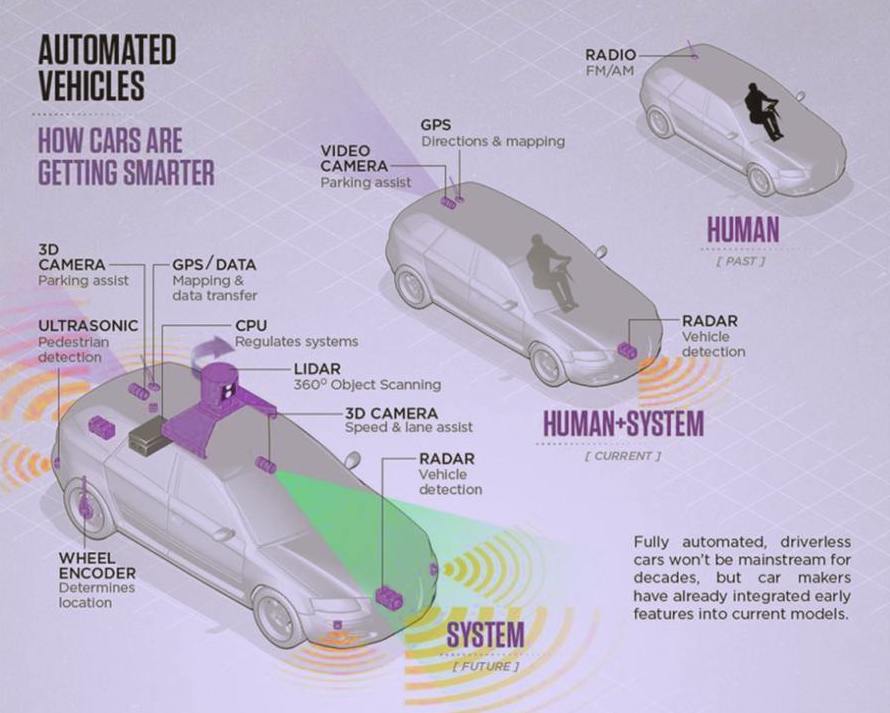
The first step in autonomous driving is perception - understanding the vehicle’s surroundings. This process relies on sensor fusion technologies that integrate data from multiple sources, including cameras, LiDAR, radar, and ultrasonic sensors. Each sensor has strengths: cameras excel at recognizing signs and signals, while radar and LiDAR provide accurate depth and distance measurements.
Decentralized AI revolutionizes sensor fusion by distributing data processing across a network of vehicles. Instead of relying solely on centralized servers, AVs can share insights locally, reducing latency and ensuring critical decisions are made in real time. For example, if one car detects a sudden obstacle, it can immediately alert nearby vehicles without waiting for cloud-based updates.
At the heart of this perception system are machine learning algorithms and computer vision technologies, which analyze sensor data to identify pedestrians, vehicles, and road conditions. Advanced neural network architectures, such as convolutional neural networks (CNNs), enable vehicles to process visual information and make navigation decisions. In a decentralized system, these networks can be trained and updated collaboratively across vehicles, creating a continuously improving ecosystem.
The Road to Self-driving cars
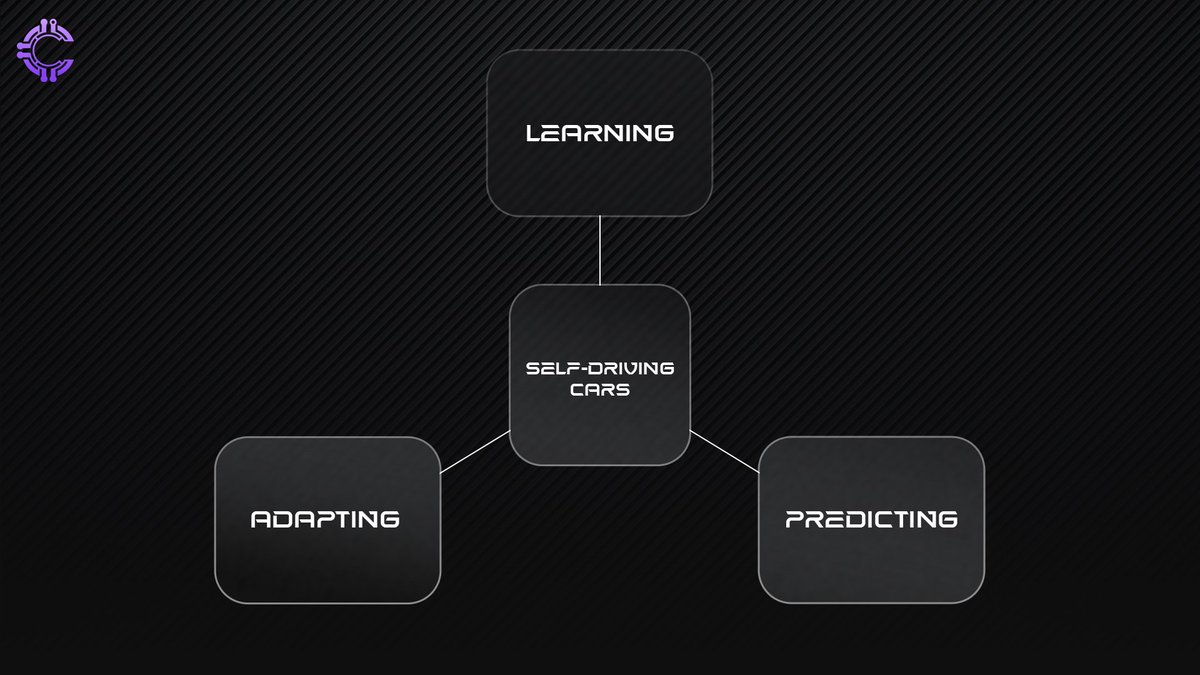
Core AI Technologies: Learning, Predicting, and Adapting
Beyond perception, autonomous vehicles rely on core AI technologies to predict traffic patterns, adapt to dynamic environments, and optimize routes. Deep learning frameworks are essential for tasks like recognizing objects, understanding road scenarios, and classifying behaviors. CNNs are widely used for visual tasks, while reinforcement learning teaches AVs to make decisions by simulating millions of driving scenarios.
A key challenge in AV deployment is predicting complex traffic behaviors, such as anticipating sudden lane changes or pedestrian crossings. Predictive algorithms, powered by decentralized AI, allow vehicles to process and share real-time traffic insights. For instance, when one vehicle encounters an unusual traffic condition, decentralized AI enables it to share the learned response with others, fostering collective intelligence.
The Decentralized Edge: Privacy, Efficiency, and Scalability
Traditional centralized AI systems can create bottlenecks and expose sensitive data to security risks. Decentralized AI addresses these challenges by shifting computations to the edge - within the vehicles themselves or across localized networks. This not only accelerates decision-making but also enhances data privacy, as sensitive information never leaves the vehicle.
Moreover, decentralized AI ensures scalability. In a future with millions of AVs on the road, centralized systems may struggle to handle the sheer volume of data. Decentralized systems distribute the computational load, making large-scale deployment feasible while reducing vulnerabilities to outages or cyberattacks.
Navigating Legal Complexities in Autonomous Vehicle Accidents
The rise of autonomous vehicles powered by decentralized AI promises transformative benefits, including enhanced safety and efficiency. However, it also presents profound legal and technical challenges, particularly when accidents occur. Traditional liability frameworks struggle to adapt to the distributed decision-making processes of decentralized AI, raising critical questions about accountability. Who is responsible when an autonomous system makes an error - the manufacturer, the software developer, or the AI itself?
Accident forensics becomes equally complex. Decentralized systems are just distributed nodes, often anonymized, data that complicates evidence collection and reconstruction. This lack of centralized control challenges conventional methods for determining fault and obtaining legal redress.
Addressing these issues requires collaboration between technologists, policymakers, and legal experts to develop robust regulatory standards and innovative tools.
Rethinking Liability in the Age of Decentralized AI
Traditional liability models focus on driver responsibility, manufacturer accountability, or insurance coverage. However, with autonomous vehicles powered by decentralized AI, these models become inadequate. Decentralized AI distributes decision-making across a network of vehicles and infrastructure, making it harder to assign blame for accidents. For instance:
•Data-Driven Decisions: When vehicles collaborate through shared data to make driving decisions, liability may be distributed across multiple stakeholders, including software developers, vehicle manufacturers, and infrastructure providers.
•Algorithmic Accountability: Decentralized systems complicate the question of accountability for algorithmic failures. If an AI misinterprets sensor data or prioritizes one safety outcome over another, identifying the responsible party is difficult.
New liability frameworks are needed to address scenarios like these. Potential approaches include shared responsibility models, mandatory AI audits, and real-time system monitoring for compliance.
Decentralized Evidence Systems: Recording the Truth
Gathering and managing evidence after an autonomous vehicle accident is a critical challenge. Decentralized AI creates a distributed system where decision logs, sensor data, and network communications are processed locally. To ensure transparency and reliability:
• Blockchain Integration: Blockchain technology can serve as an immutable record-keeping system, storing decision logs securely across decentralized nodes. This ensures that data remains tamper-proof and provides an audit trail for accident investigations.
• AI Black Boxes: Autonomous vehicles equipped with decentralized AI need advanced data storage systems akin to “black boxes” in airplanes. These systems can locally store sensor and decision-making data, accessible only in the event of an incident.
AI Forensics and Accident Reconstruction
Reconstructing accident scenarios involving decentralized AI systems requires advanced forensic tools. Decentralized systems produce fragmented data, necessitating methods to collate and analyze these inputs effectively. Solutions include:
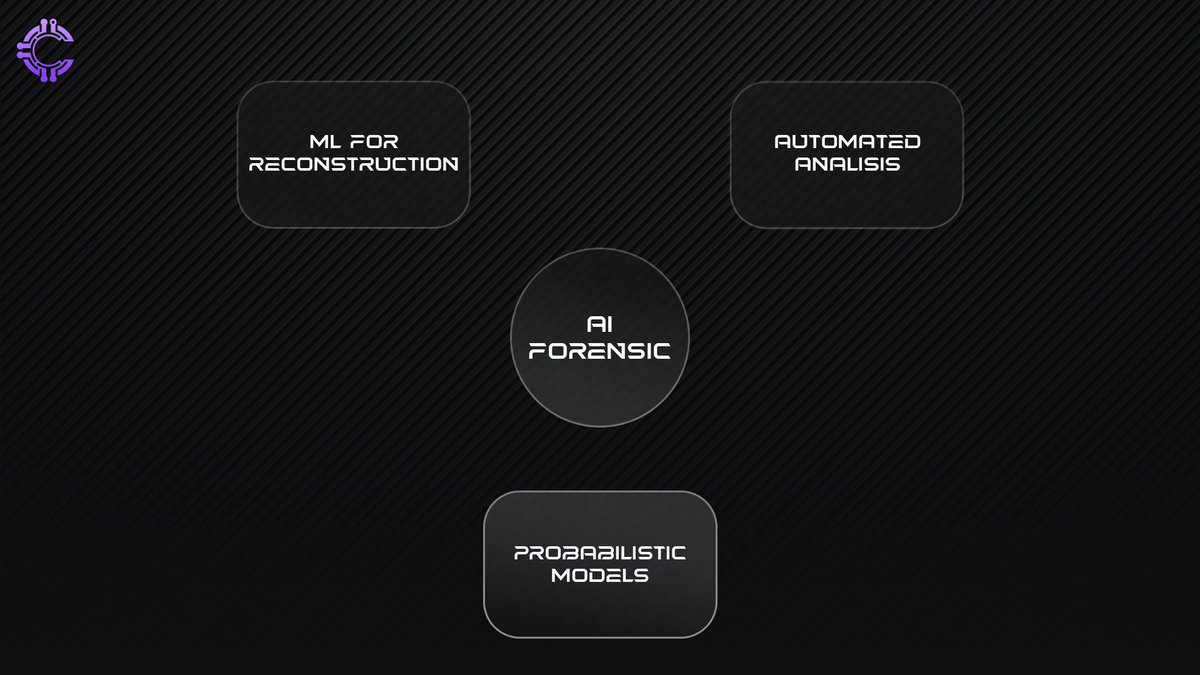
•Machine Learning for Reconstruction: AI models can analyze accident data, such as sensor readings and vehicle positions, to recreate the events leading up to a collision.
•Probabilistic Models: These tools estimate the likelihood of different accident outcomes, providing insights into decision-making failures.
•Automated Analysis: Decentralized systems can enable real-time analysis of accidents by using localized AI to process data collaboratively across vehicles and infrastructure.
Balancing Innovation with Accountability
Decentralized AI offers scalability, privacy, and efficiency, but its integration in autonomous vehicles demands robust legal and technical safeguards. By combining blockchain for secure evidence storage, machine learning for forensic analysis, and ethical frameworks for algorithm design, we can address the challenges posed by this technology. Creating clear liability and evidence standards is essential for building trust in autonomous systems and paving the way for widespread adoption.
This technical and legal balancing act is the key to ensuring that decentralized AI powers not only smarter autonomous vehicles but also safer and more accountable ones.
The Road Ahead
The future of autonomous vehicles will be defined by advancements in predictive technologies, human-AI interfaces, and risk mitigation systems - all enhanced by decentralized AI. These innovations aim to make autonomous systems smarter, safer, and more responsive in real-world scenarios.
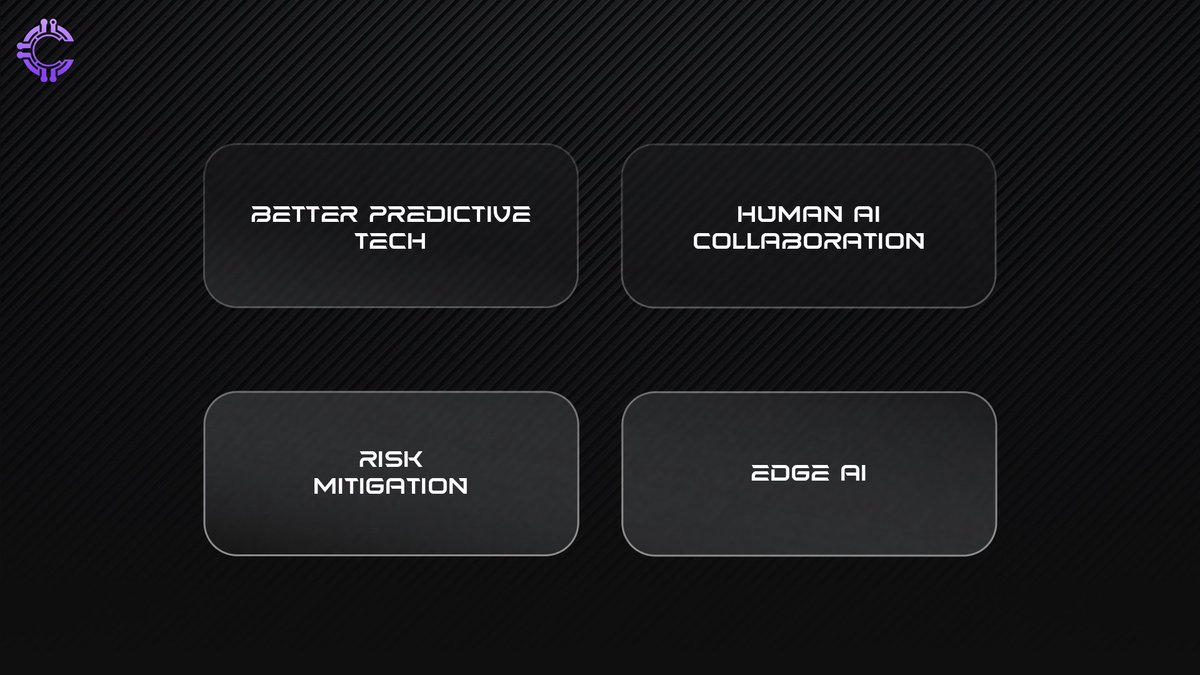
Better Predictive Tech
With the integration of quantum computing, autonomous systems will achieve unparalleled predictive capabilities. Probabilistic risk modeling will allow vehicles to anticipate complex traffic patterns, while AI-driven predictive maintenance will identify potential failures before they occur, reducing downtime and enhancing reliability.
Human-AI Collaboration
To ensure trust and control, next-generation human-AI interfaces will feature intuitive override systems and transparent communication protocols. These technologies will give users confidence in AI decisions while enabling seamless collaboration when manual intervention is necessary.
Risk Mitigation and Safety Innovations
Decentralized AI will power real-time risk calculation algorithms and contextual awareness systems, enabling vehicles to proactively avoid collisions. Neuromorphic computing and self-healing AI systems will enhance resilience by adapting to unforeseen challenges and recovering from errors autonomously.
Emerging Paradigms
Edge AI and quantum machine learning will transform decision-making with faster computations, reduced latency, and localized privacy-focused processing. These breakthroughs will redefine autonomous mobility, blending efficiency with safety and accountability for a more connected and reliable future.
Charting the Road Ahead: The Promise and Challenges of Decentralized AI in Autonomous Vehicles
The rise of autonomous vehicles powered by decentralized AI is more than a technological shift—it’s a profound transformation of how we move, live, and interact with our environment. From reducing road accidents caused by human error to optimizing urban infrastructure, the potential benefits are immense. Yet, this revolution comes with significant challenges that demand innovative solutions.
Decentralized AI offers unique advantages, such as faster decision-making, enhanced privacy, and resilience against centralized failures. By processing data locally and collaboratively, it ensures real-time adaptability while safeguarding sensitive information. For instance, real-world pilot programs for self-driving cars have already demonstrated a significant reduction in traffic accidents, with 94% of crashes historically attributed to human error likely to diminish in the future. However, these systems also introduce new complexities. How do we attribute liability when decisions are made collectively by an AI network? How do we design systems that balance safety, efficiency, and ethical considerations in life-or-death scenarios?
The answer lies in building a robust framework that combines technological innovation with transparent governance. Blockchain-powered evidence systems, ethical AI training protocols, and advanced forensic tools can help address these issues. Additionally, emerging paradigms like edge AI and quantum machine learning promise to redefine scalability and security for the millions of vehicles that will soon populate our roads.
As cities redesign infrastructure and policymakers craft new regulations, collaboration between tech innovators, legal experts, and urban planners will be crucial. The journey toward fully autonomous mobility is as much about creating trust and accountability as it is about advancing AI.
The road ahead is both thrilling and uncertain, but one thing is clear: the era of decentralized AI-driven autonomous vehicles is just beginning. By embracing innovation responsibly, we can create a future that is not only smarter but also safer and more sustainable for generations to come.
About Cluster Protocol
Cluster Protocol is the co-ordination layer for AI agents, a carnot engine fueling the AI economy making sure the AI developers are monetized for their AI models and users get an unified seamless experience to build that next AI app/ agent within a virtual disposable environment facilitating the creation of modular, self-evolving AI agents.
Cluster Protocol also supports decentralized datasets and collaborative model training environments, which reduce the barriers to AI development and democratize access to computational resources. We believe in the power of templatization to streamline AI development.
Cluster Protocol offers a wide range of pre-built AI templates, allowing users to quickly create and customize AI solutions for their specific needs. Our intuitive infrastructure empowers users to create AI-powered applications without requiring deep technical expertise.
Cluster Protocol provides the necessary infrastructure for creating intelligent agentic workflows that can autonomously perform actions based on predefined rules and real-time data. Additionally, individuals can leverage our platform to automate their daily tasks, saving time and effort.
🌐 Cluster Protocol’s Official Links: